News
NAIRL Hosts GARL 2026 Challenge and Global Networking
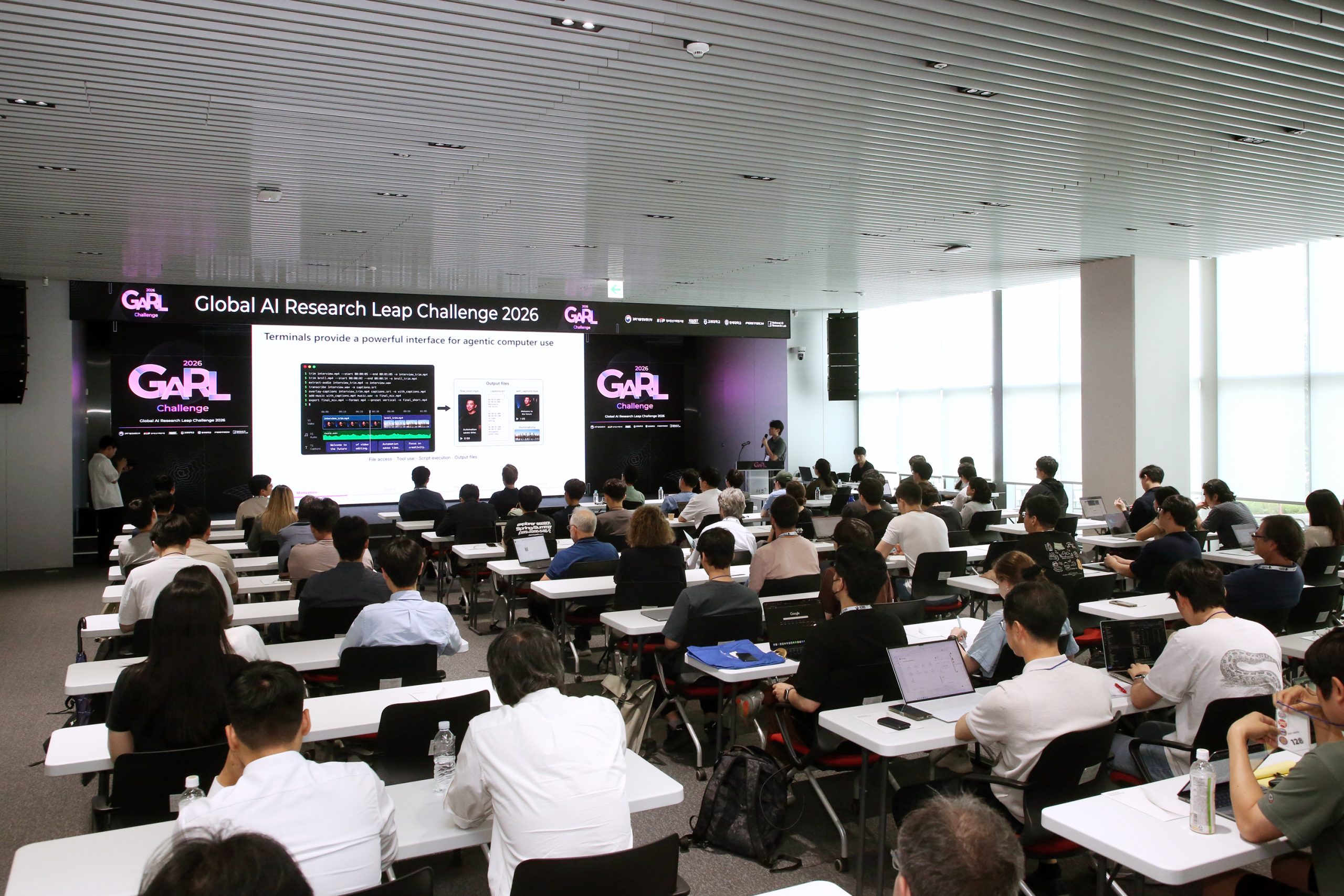
National AI Research Lab (NAIRL) hosted GARL 2026 Challenge & Global Networking on July 8 at the Seocho AICT Center in Seoul. The Global AI Research Leap (GARL) Challenge is designed to identify creative and ambitious AI research topics at an early stage and share them with global AI researchers, supporting academic validation, international research exchange, and future collaboration.
At the event, the TOP 3 teams selected through the Challenge presented their research ideas to an audience of domestic and international AI researchers. Team MMTB, presented by Jiyoung Heo and one other member, proposed a benchmark for evaluating terminal agents on multimedia file tasks. Suyong Lee presented work on automating research on the science and engineering of AI behavior. Team OptiML, presented by Jaeyoung Cha and one other member, introduced research on improving tree-based speculative decoding through a better verification strategy.
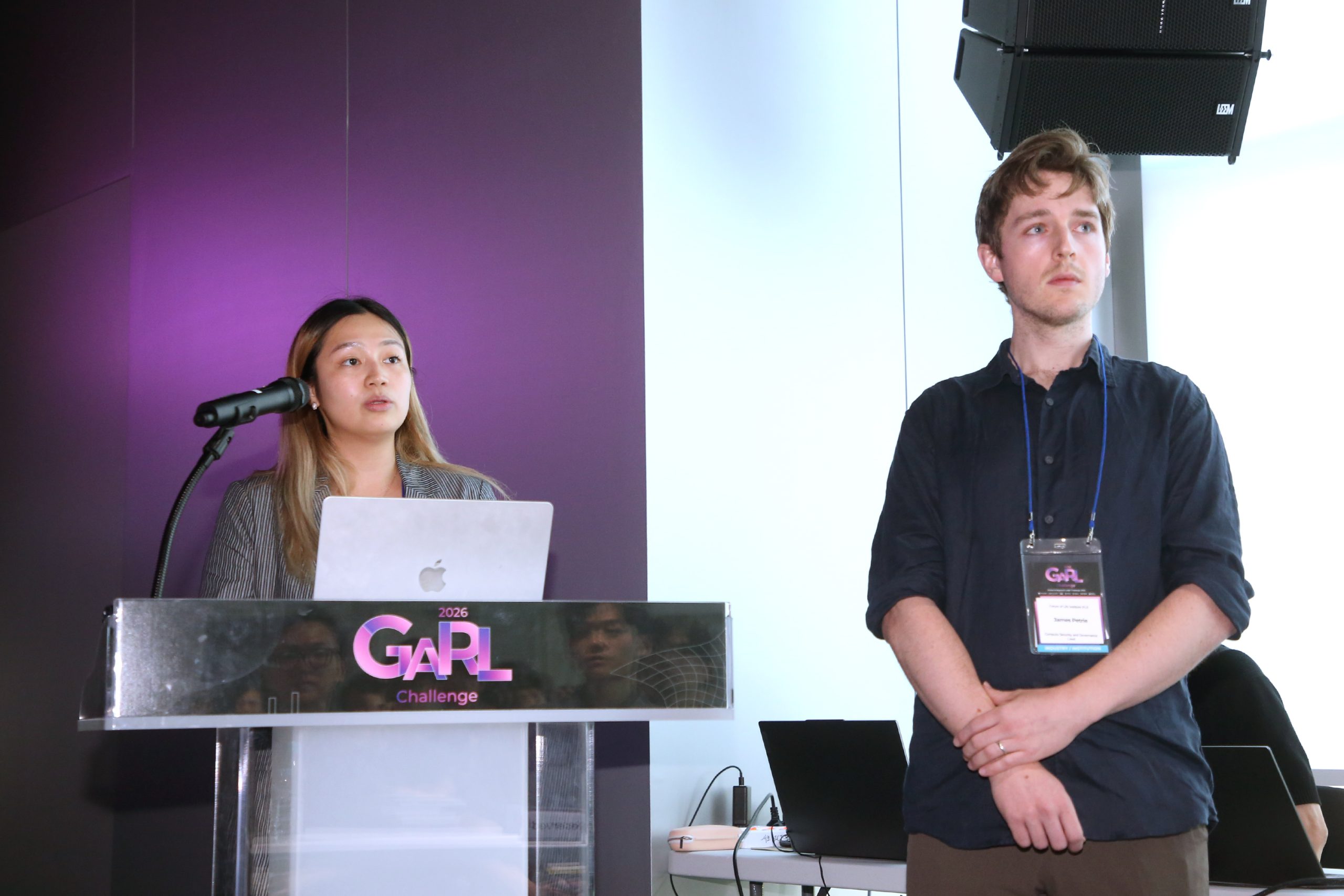
The pitches were followed by a presentation from the Future of Life Institute, which added perspective on compute governance and hardware verification. An award ceremony for the TOP 3 teams and a group photo followed.
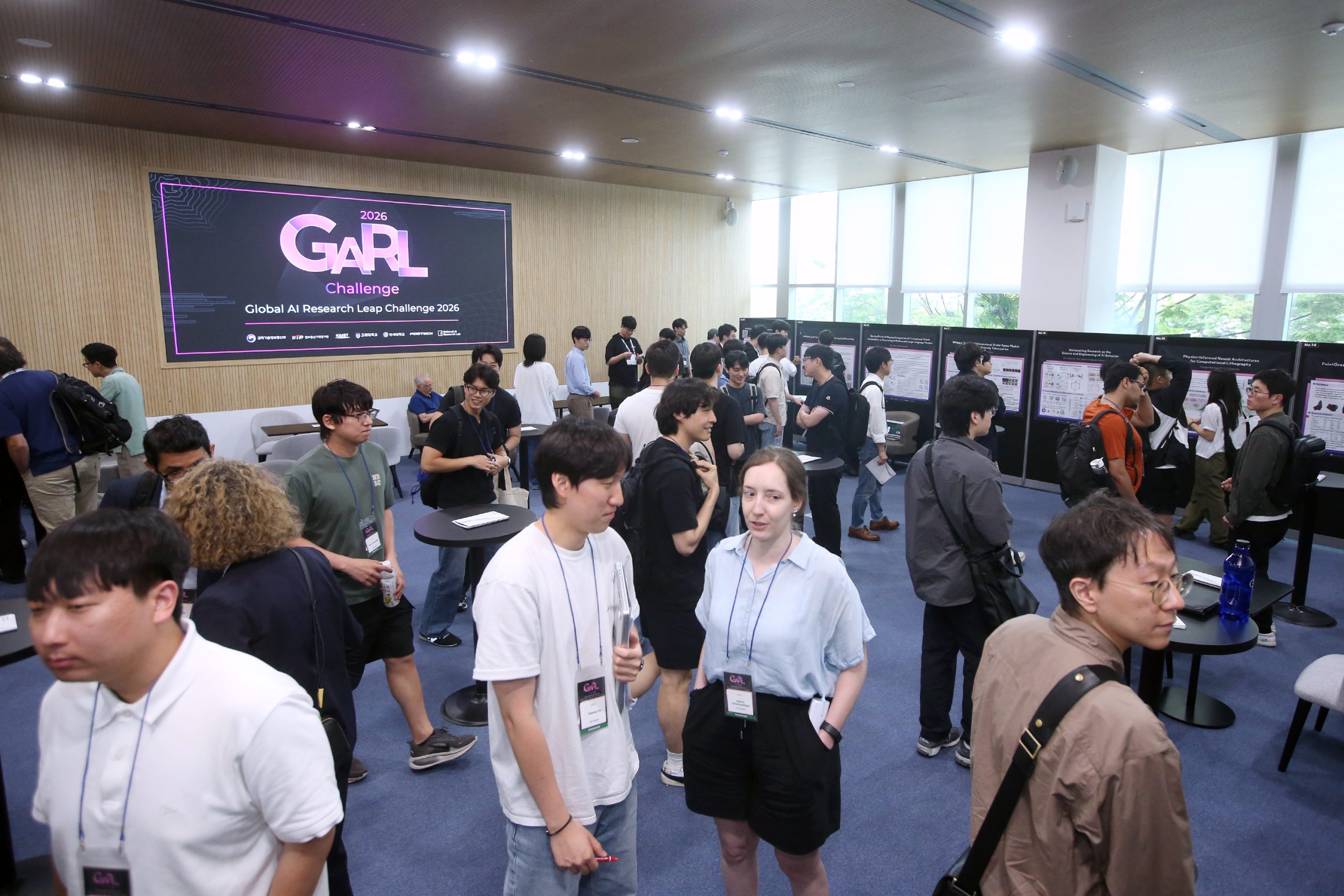
After the ceremony, an outstanding research poster session gave selected student teams the opportunity to share their work and take questions from participants. The evening continued with dinner and global networking, where researchers, students, and representatives from industry and institutions exchanged ideas and explored avenues for collaboration.
The event brought together faculty and researchers from NAIRL’s consortium of KAIST, Korea University, Yonsei University, and POSTECH, alongside international researchers including Aaron Courville, Pascal Poupart, Irina Rish, and Daniel Dongyuel Lee. Representatives from frontier AI companies and from industry and institutions in Korea and abroad also took part, creating a venue that bridged academia and industry.
NAIRL will continue to identify ambitious research from early-career researchers and connect it to the global stage, fostering an ecosystem where research drives both scientific discovery and industrial innovation.