Seminar
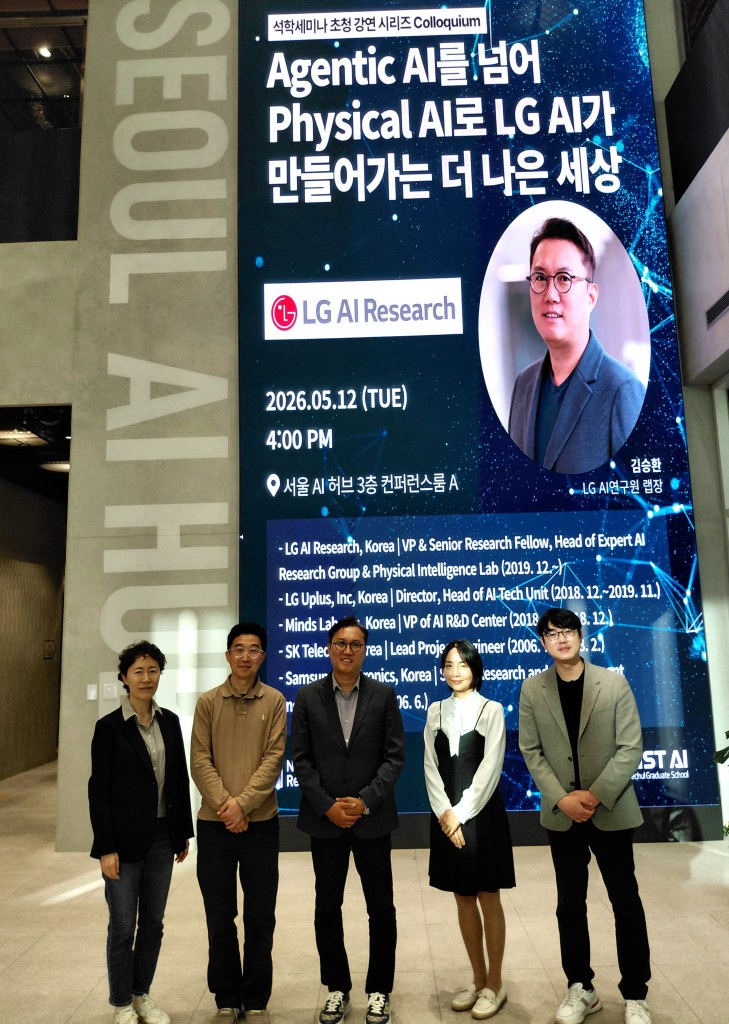
Beyond Agentic AI to Physical AI: Creating a Better World with LG AI
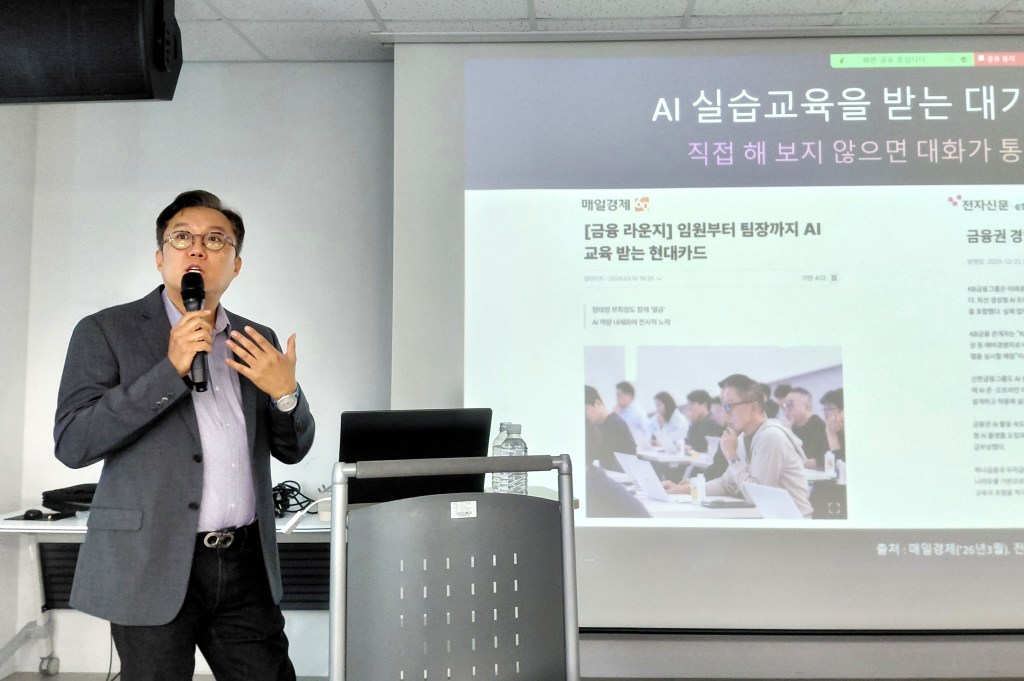
As the artificial intelligence (AI) paradigm shifts beyond generative software to tangible physical applications in the real world, Seung Hwan Kim, VP of LG AI Research, introduced the innovative potential of “Physical AI.”
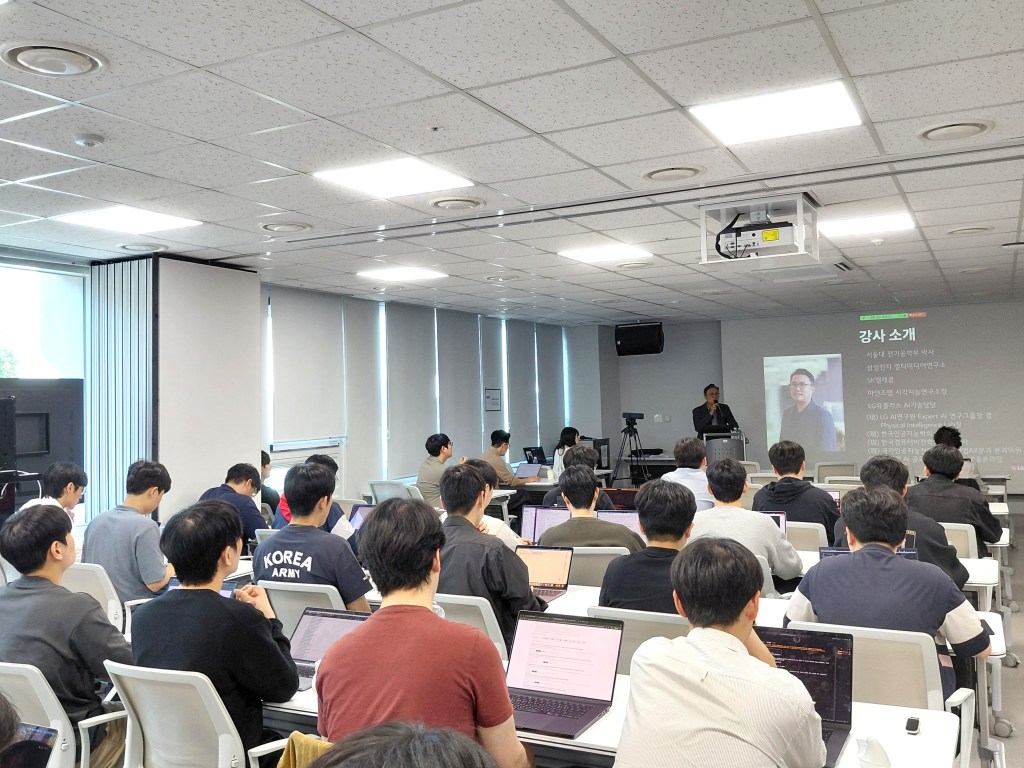
On May 12, the National AI Research Lab (NAIRL) and the KAIST Kim Jaechul Graduate School of AI co-hosted a Distinguished Scholar Seminar featuring VP Kim at the Seoul AI Hub. Held under the theme “Beyond Agentic AI to Physical AI: Creating a Better World with LG AI,” the event drew intense interest from researchers, graduate students, and industry partners eager to witness LG’s cutting-edge technological advancements, with a total of around 280 participants attending—approximately 120 on-site and 160 online.
In his lecture, VP Kim diagnosed that the next frontier of AI lies in autonomous systems capable of judging, planning, and executing tasks on their own within complex physical environments. Alongside this, he explained the concept of the “AI Native Factory,” an innovative manufacturing ecosystem where human workers, robots, and Agentic AI organically collaborate to optimize the entire industrial value chain—from R&D and production to quality control and logistics.
At the core of this transformation is LG’s proprietary foundation model, “EXAONE” (Expert AI for Everyone). Rather than relying on general-purpose language models, LG AI Research has demonstrated unparalleled focus on developing foundation models highly specialized for industrial domains. VP Kim highlighted the imminent launch of a new Vision Inspection Foundation Model equipped with continual learning capabilities, designed to resolve the severe data imbalance issues common in ultra-precision manufacturing and autonomously detect defects across diverse factory lines.
Furthermore, he illuminated LG AI Research’s unrivaled real-world deployment outcomes, sharing concrete, high-ROI success stories that prove the true value of “Expert AI.” By introducing anomaly detection AI to an LG Innotek line to achieve a fully unmanned inspection process, the company generated an astonishing annual cost reduction. Additionally, in the R&D sector, the use of “EXAONE Discovery” drastically reduced the development time for new functional cosmetic materials from 22 months to just a single day, proving LG’s capacity to accelerate R&D progress.
Beyond the manufacturing sector, VP Kim revealed an ongoing collaborative project with Vanderbilt University Medical Center to build an end-to-end medical AI platform based on “EXAONE Path” to open a new chapter in personalized cancer treatment. Through the dynamic Q&A session that followed, the seminar served to reaffirm LG AI Research’s steadfast leadership in solving the industry’s most complex challenges. NAIRL plans to continue fostering an ecosystem where domestic researchers can drive both scientific discovery and industrial innovation based on cutting-edge AI technologies, through ongoing exchanges with global-tier AI researchers, entrepreneurs, and industry leaders.