News
NAIRL Reviews Research Achievements at Jeju Workshop
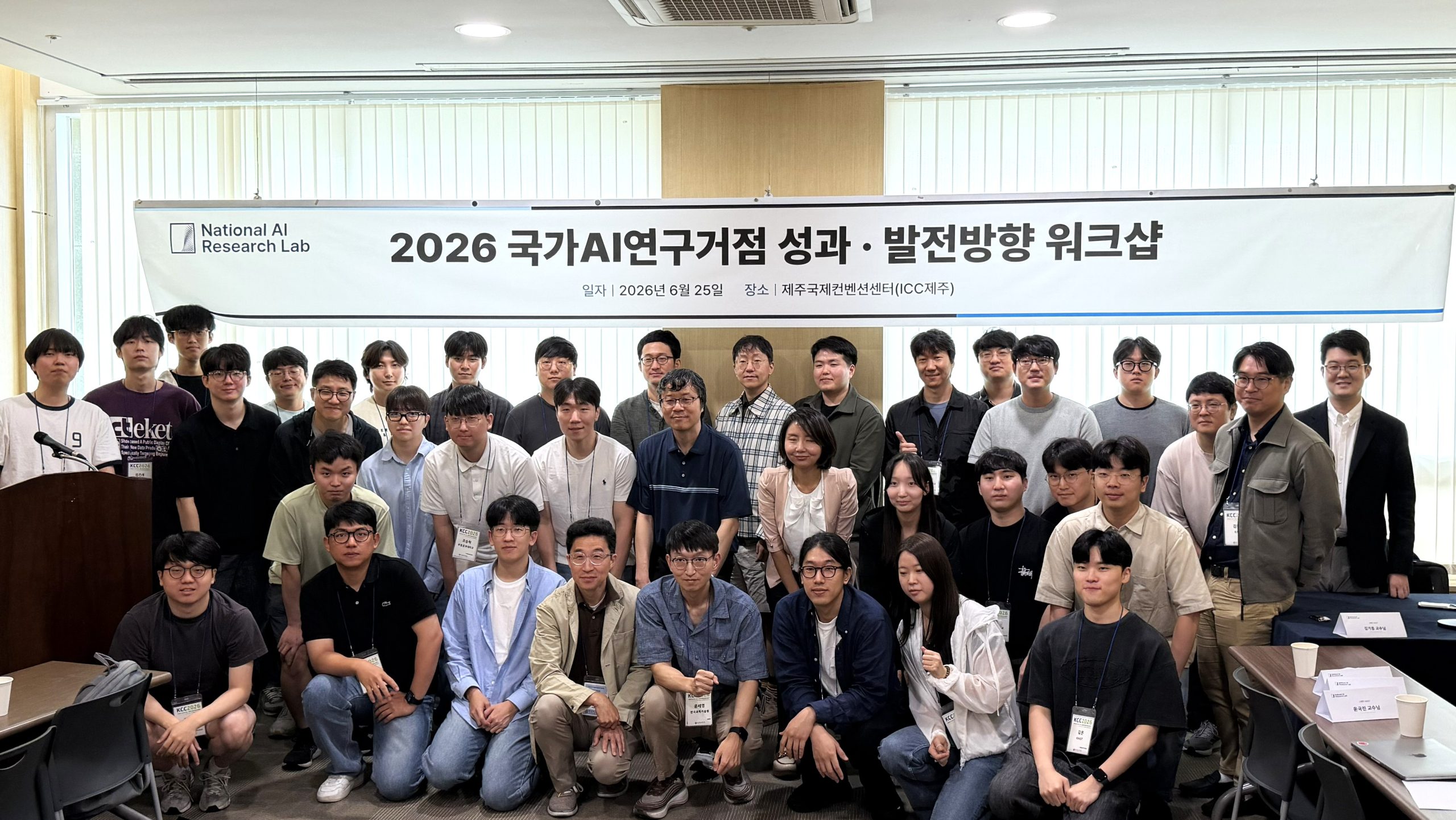
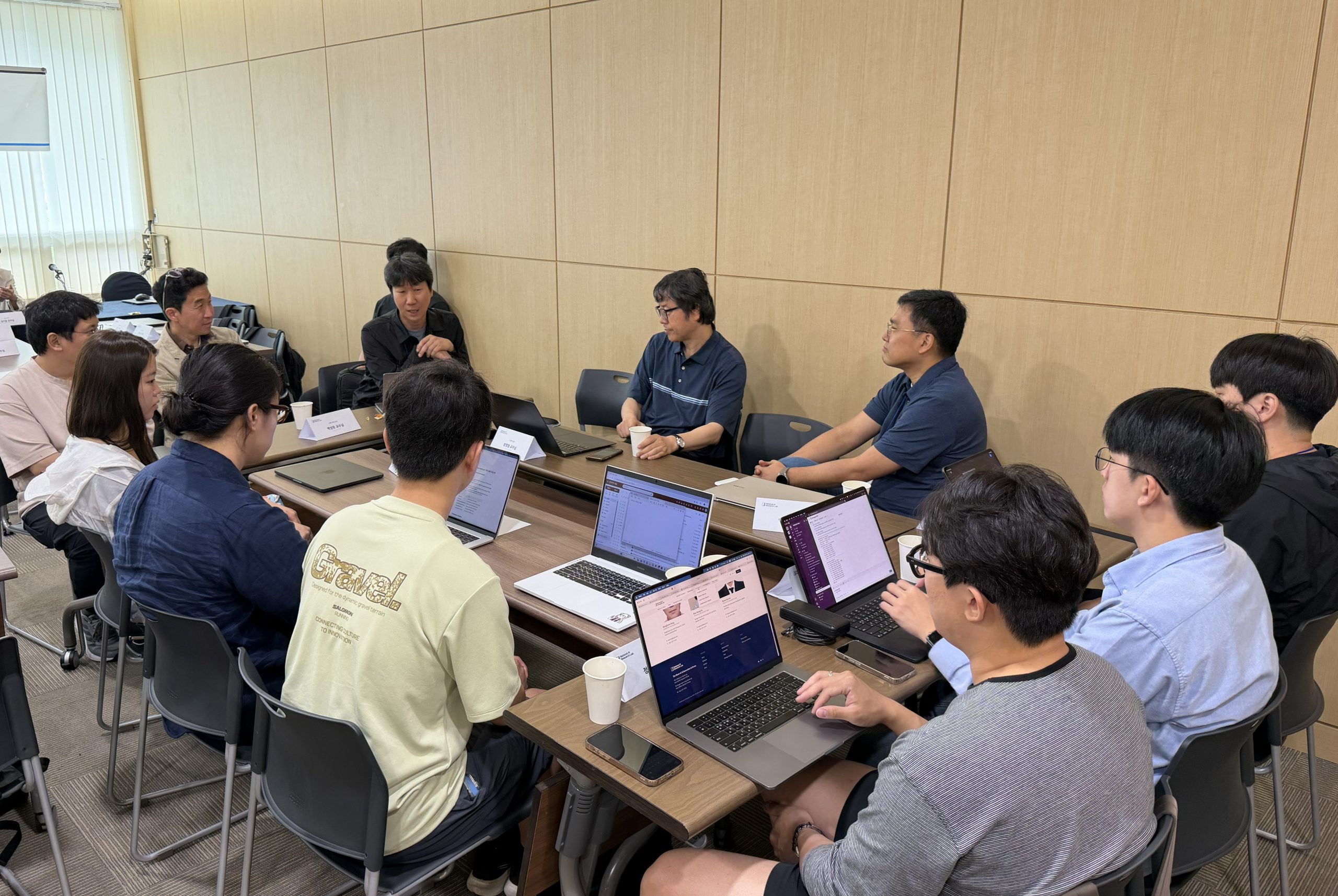
National AI Research Lab (NAIRL) held a research workshop on June 25 at the Jeju International Convention Center (ICC Jeju), reviewing its research achievements and discussing mid- to long-term strategy. Faculty and researchers leading the program’s sub-projects across the four-university consortium of KAIST, Korea University, Yonsei University, and POSTECH took part, examining progress, key results, and directions for future collaboration.
NAIRL’s research advances along three sub-projects. The first pursues core technologies that move beyond the limits of neural scaling laws through model compression, learning algorithms, novel architectures, and data efficiency. The second develops robot foundation models for next-generation Physical AI, while the third builds high-dimensional multimodal foundation models grounded in the real world, spanning video, medical imaging, 3D/4D, molecular structures, and time series.
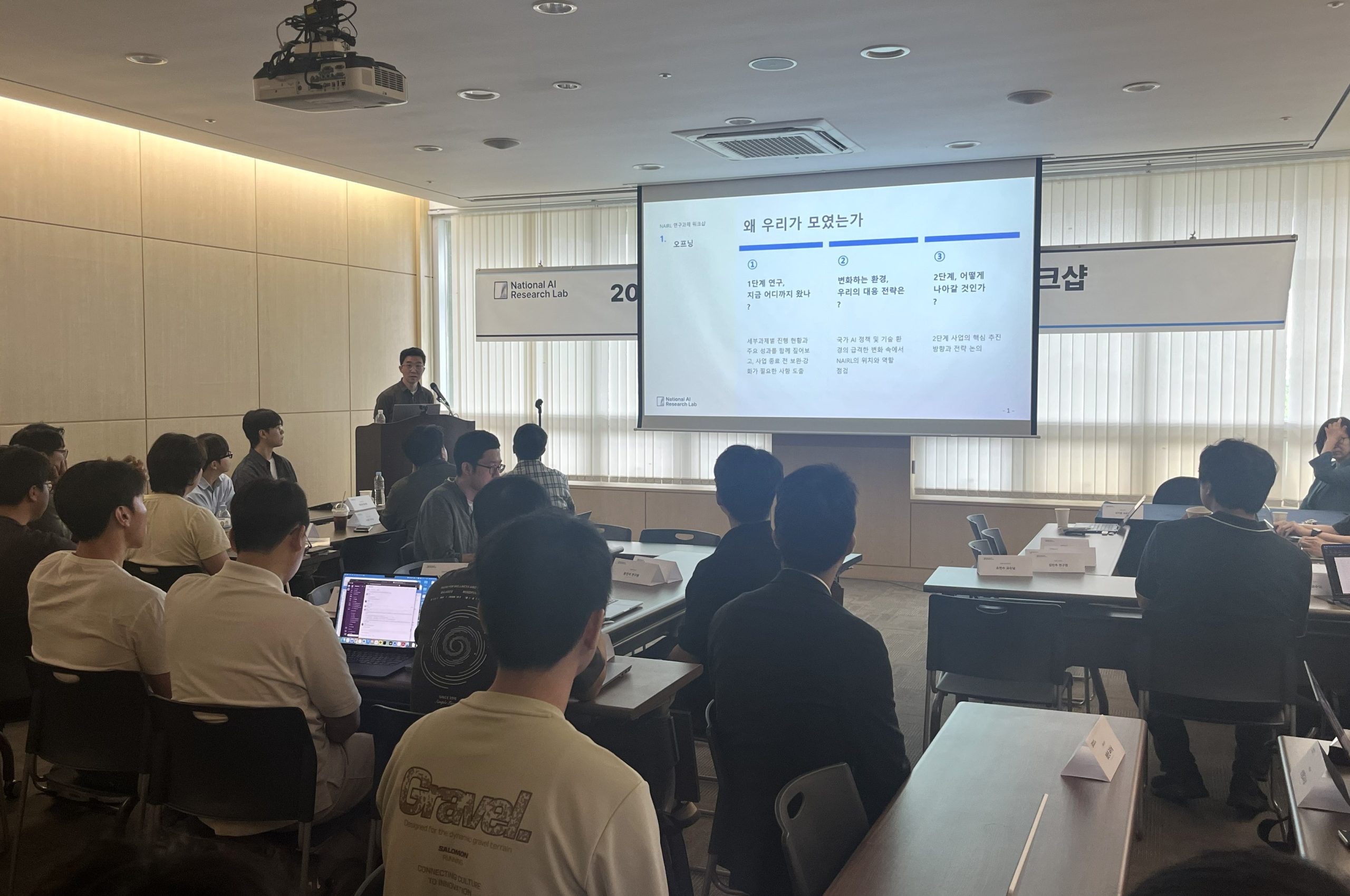
The achievements to date have stood out on the international stage. NAIRL researchers published 357 papers at top-tier AI conferences in the top 10 percent, more than double the target, and exceeded their goals in open-source software and patent filings as well. In core technologies in particular, the team more than doubled the previous world-best record in open-vocabulary segmentation of unseen objects, confirming world-class performance.
Large-scale compute infrastructure and international collaboration underpinned these results. NVIDIA B200 GPUs made large-scale pre-training of foundation models possible, while joint research and internships with overseas institutions such as NYU and Mila expanded the lab’s global research network. These partnerships are translating into the cultivation of talented researchers and follow-on joint research.
Going forward, NAIRL plans to move its early foundation models toward real-world deployment and refinement, while further strengthening cross-project collaboration and industry engagement. NAIRL will continue to foster an ecosystem where researchers drive both scientific discovery and industrial innovation, extending Korea’s AI research capabilities onto the global stage.