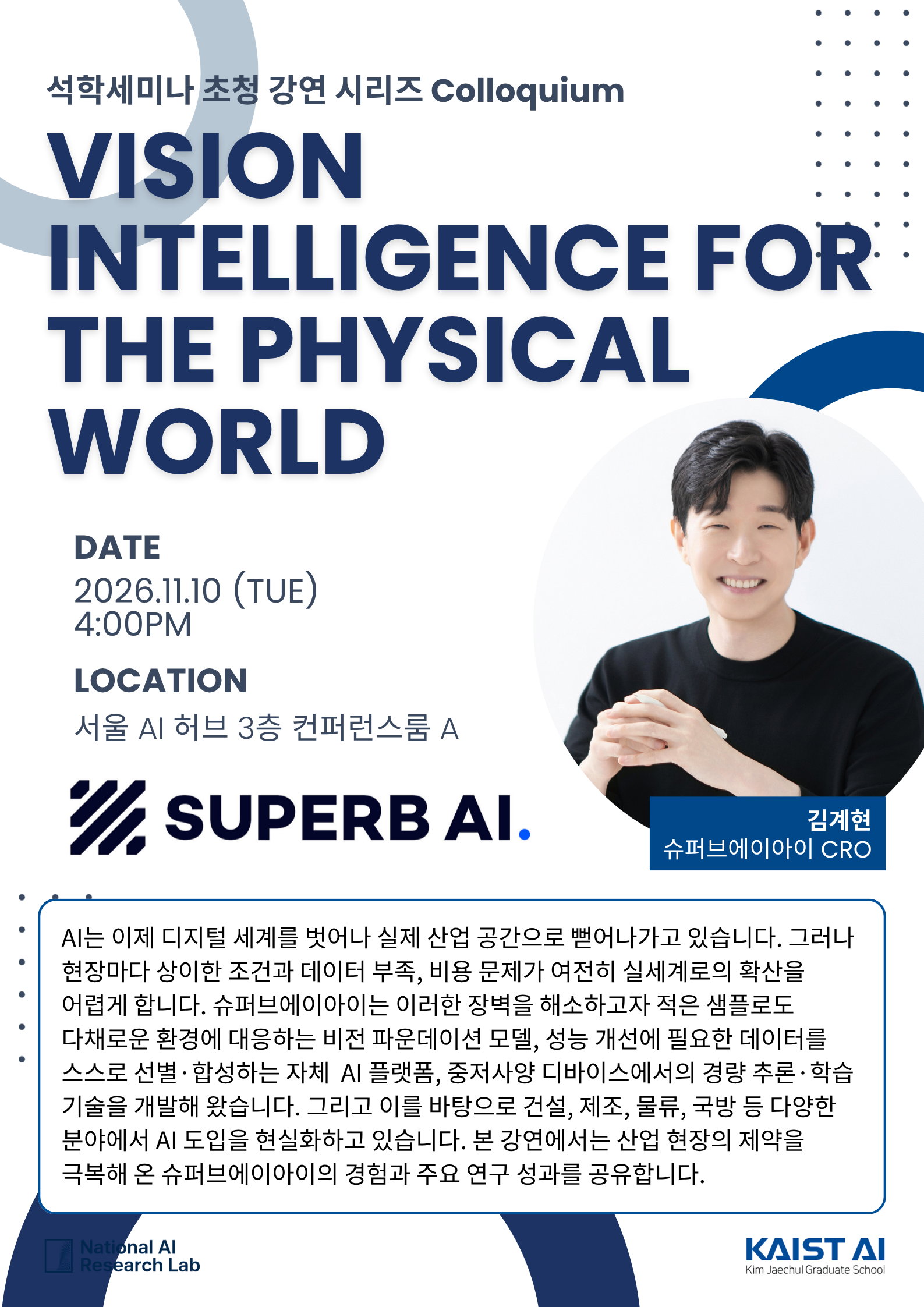
Seminar
Vision Intelligence for the Physical World
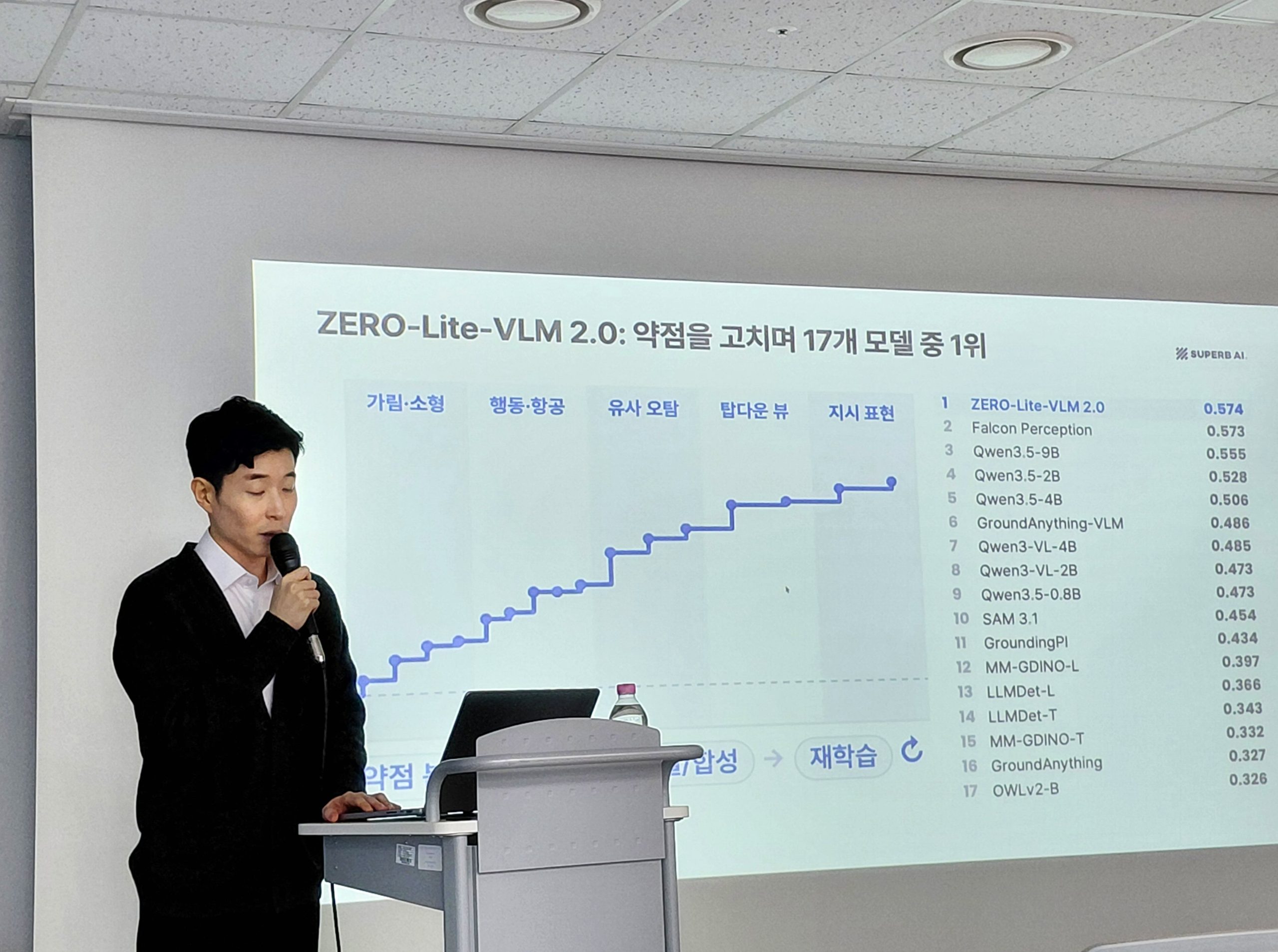
AI is moving out of the digital world and into real industrial spaces, yet most sites still struggle to adopt it. Kye-Hyeon Kim, Chief Research Officer (CRO) at Superb AI, drew on the company’s experience across a range of industrial sites to explain what holds adoption back and how his team has addressed each obstacle.
On November 10, the National AI Research Lab (NAIRL) and the KAIST Kim Jaechul Graduate School of AI co-hosted a Distinguished Scholar Seminar at the Seoul AI Hub, featuring Kim as the invited speaker. Held under the theme “Vision Intelligence for the Physical World,” the event drew around 250 participants in total, with approximately 100 attending on-site and 150 joining online.
Kim identified three barriers to industrial adoption: scarce data, conditions that differ from site to site, and cost. Of the three, he noted, data is the hardest to solve with budget alone, since many field processes rely on the undocumented know-how of individual workers.
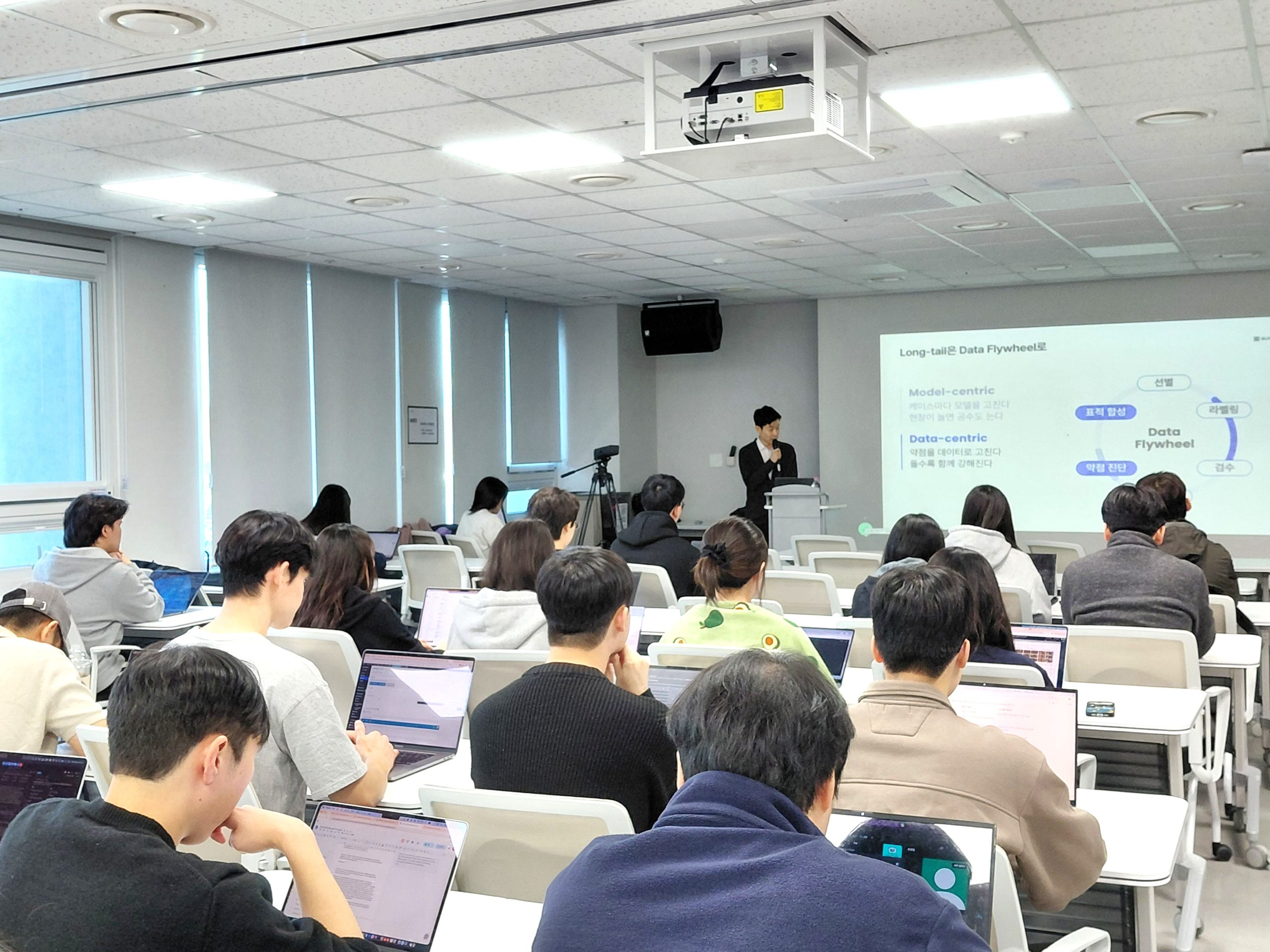
The first answer was the data flywheel in Superb Platform. Instead of redesigning the model for every customer, the platform finds where a model fails and generates synthetic data that targets those weaknesses. The team has refined this loop by applying it to the training of its own new models.
To address the months of re-optimization usually required when moving from one site to another, Kim introduced ZERO, the company’s industry-specific vision foundation model. ZERO is a zero-shot object detector that accepts both text and example images as prompts, which proves useful for industrial objects that are hard to describe in words.
On cost, Kim explained that customers want to monitor dozens of cameras around the clock with one or two servers. His team built a lightweight model, enabling real-time processing with modest computing resources. By organizing what the cameras see into structured data across space and time, most queries can be answered without calling a large vision-language model.
Kim also described techniques for reducing training cost. Upgrading the foundation model had previously required costly full retraining, he said, whereas the new approach achieved better performance on far more modest hardware.
Finally, he shared ongoing work to extend these technologies to Physical AI. A patrol robot covers the blind spots of fixed cameras and was presented in a demonstration video, while a separate research effort converts ordinary videos of human work into training data for robots, demonstrated on household tasks and a manufacturing assembly task.
NAIRL plans to continue fostering an ecosystem where domestic researchers can drive both scientific discovery and industrial innovation based on cutting-edge AI technologies, through ongoing exchanges with leading AI researchers, entrepreneurs, and industry leaders from around the world.