Seminar
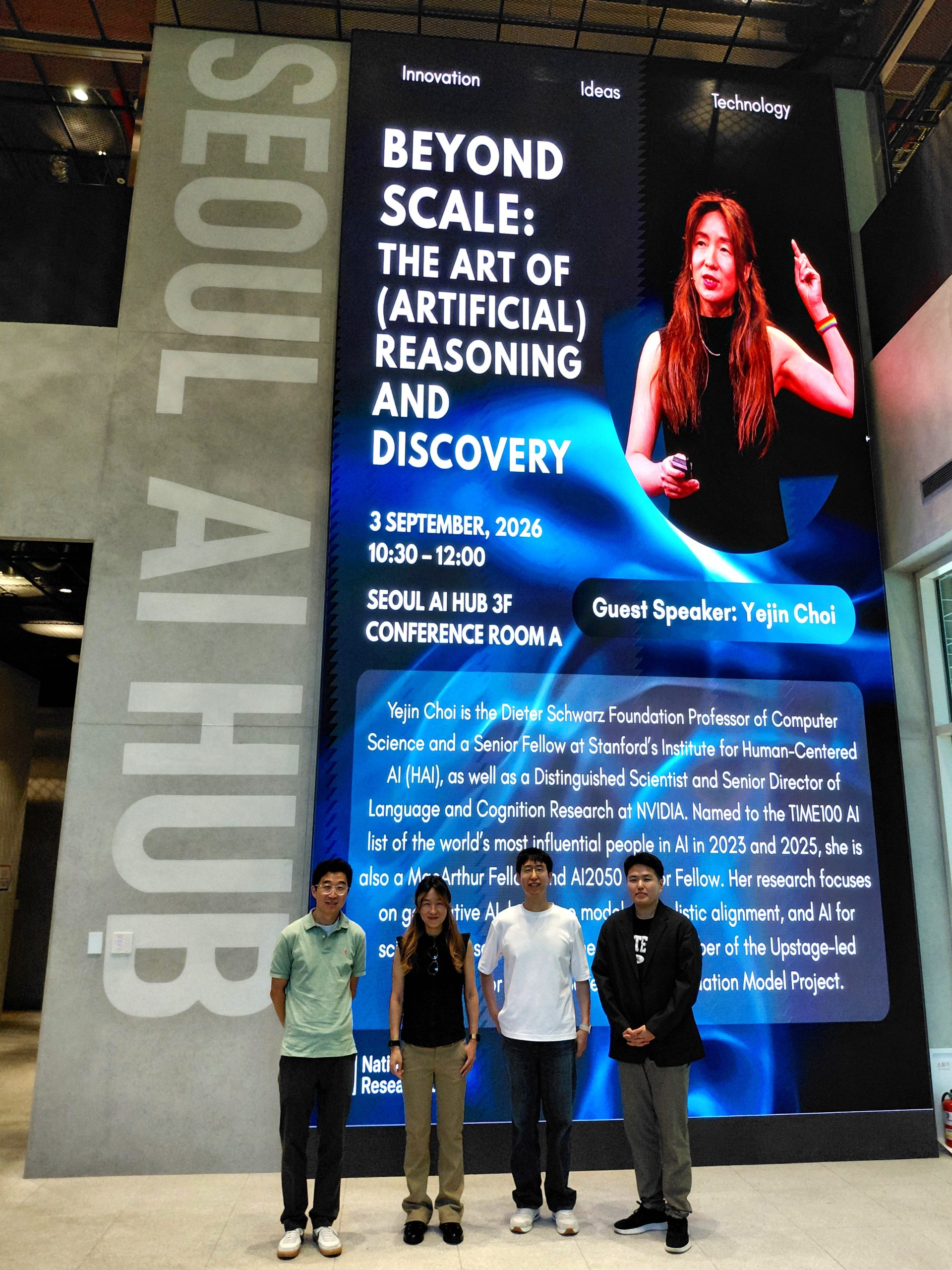
Beyond Scale: The Art of (Artificial) Reasoning and Discovery
National AI Research Lab (NAIRL) hosted a special lecture by Professor Yejin Choi of Stanford University at Seoul AI Hub on September 3. Professor Choi returned to NAIRL following her keynote at the Global AI Frontiers Symposium (GAFS) last year, and the lecture was designed as a research-oriented academic session for the researcher community.
Yejin Choi is a Professor of Computer Science at Stanford University and a Senior Fellow at the Stanford Institute for Human-Centered AI (HAI), and also serves as a Distinguished Scientist and Senior Director at NVIDIA. A MacArthur Fellow and twice named to the TIME100 AI list of the most influential people in AI, she has received two Test-of-Time Awards from leading conferences in natural language processing and computer vision, and is recognized as one of the defining researchers in commonsense reasoning and language AI.
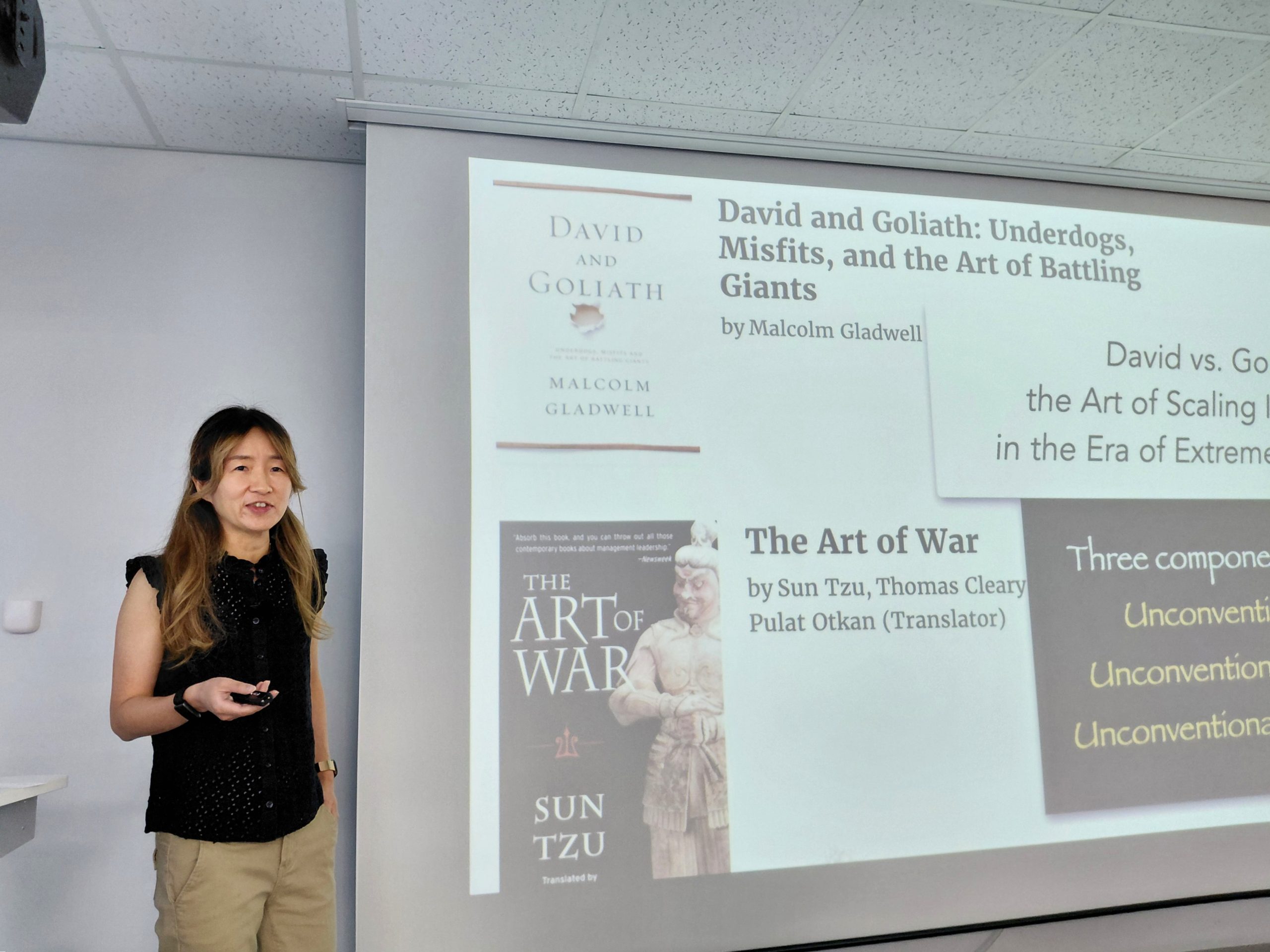
Under the title “Beyond Scale: The Art of (Artificial) Reasoning and Discovery,” Professor Choi opened by framing today’s AI landscape as a story of David and Goliath. Academic researchers, and research ecosystems outside a handful of resource-rich frontier organizations, face a structural gap in compute and data. Rather than lamenting the gap, she argued, the path forward lies in three forms of innovation: unconventional data, unconventional algorithms, and unconventional collaboration.
She then walked through a series of recent research directions that put this philosophy into practice. These included strategies for synthesizing training data from the vast body of web text that comes without verified answers, expanding what reinforcement learning can learn from; approaches that identify the problems a model cannot yet solve and concentrate training exactly where learning actually happens; principled ways of measuring the diversity of data without distortion; and methods that allow a model to keep learning after deployment, adapting to the specific problem in front of it and unlocking capabilities on hard scientific and engineering challenges. She also introduced an orchestration paradigm in which a small model learns to coordinate tools ranging from search and calculators to specialized small models and even larger frontier models, achieving strong performance at a fraction of the cost.
Professor Choi closed with a distinction that resonated throughout the room: winning the frontier is not the same as winning deployment and adoption, and the latter remains wide open. With the open model ecosystem growing rapidly, she argued, the keys to that opportunity are painstaking effort on well-curated data and collaboration that sets ego aside. It was a message with particular relevance for Korea’s research community as it navigates the question of sovereign AI.
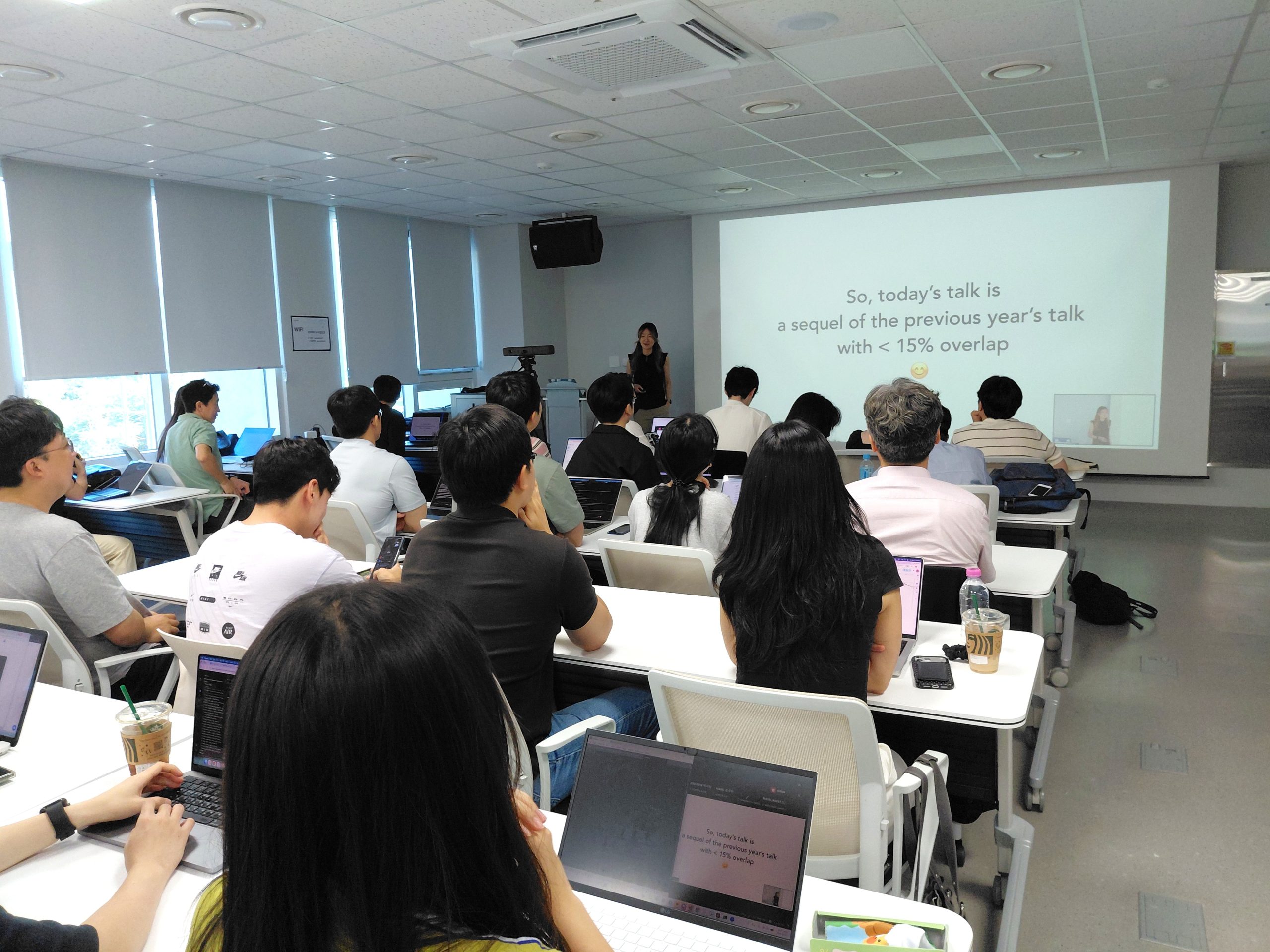
The lecture drew about 110 on-site attendees, including students, researchers, and partner institution and industry representatives from across KAIST, Korea University, Yonsei University, and POSTECH, the universities of the NAIRL consortium, with another 100 joining online for a total of over 210 participants.
Following the lecture, Professor Choi held small-group research meetings with research groups of NAIRL participating professors. Teams from Korea University, KAIST, and POSTECH each joined with their students, engaging in in-depth discussions on topics including reinforcement learning for reasoning, understanding and controlling AI agents, and efficient reasoning.
NAIRL will continue to broaden exchanges with leading researchers worldwide, strengthening its role in connecting Korea’s research community with the global AI research network.