

South Korea has declared its ambition to become one of the world’s top three AI powerhouses, with both the government and the private sector working together to expand AI research and development infrastructure. The country is taking national-level steps to secure large quantities of high-performance graphics processing units (GPUs) — now in global shortage — and to support the development of domestic AI semiconductors (NPUs), effectively building an “AI superhighway.” At the same time, projects to develop homegrown large-scale AI foundation models are underway, along with policies to establish AI training computing centers that open vast datasets to the private sector.
However, infrastructure investment alone is not enough. The ultimate success or failure of the AI era depends on human talent — and Korea faces a severe shortage. According to a 2024 survey by the Software Policy & Research Institute (SPRi), 81.9% of domestic AI companies (among 2,354 surveyed) reported manpower shortages, and by 2027, the nation is expected to be short about 12,800 AI professionals.
The outflow of top talent abroad is a particularly pressing issue. Many master’s and Ph.D.-level AI experts are heading to the U.S. and other countries after graduation. Salaries at global tech giants can be two to three times higher than in Korea, and these firms offer unmatched opportunities for world-class research experience. At a recent policy meeting at the National AI Research Hub, graduate students preparing to go overseas lamented that “there’s no environment for growth in Korea.” Such trends suggest that Korea is locking into a “the more capable, the more they leave” structure.
To secure talent, the government has announced special measures. The Ministry of Science and ICT launched the “InnoCore Program”, pledging to recruit 400 postdoctoral researchers in the AI field at annual salaries of 90 million KRW, placing them directly into key research roles. While this is a bold investment, many experts note that offering high salaries alone cannot solve the problem. The more fundamental task is to improve Korea’s research environment and strengthen links between academia and industry employment.
Korea’s organizational culture is another obstacle. A short-term, results-oriented evaluation system and a seniority-based compensation structure often push young, talented researchers to seek opportunities abroad. When hard work is not properly rewarded and the domestic ecosystem remains disconnected from the global stage, retaining talent becomes nearly impossible.
Companies on the ground are also struggling with acute labor shortages, especially IT startups and small to mid-sized enterprises (SMEs). Large corporations with sufficient capital and brand power have already established overseas development centers to secure local engineers, but smaller startups often can’t afford to. As a result, they frequently face project delays due to a lack of developers. Some have begun recruiting abroad — hosting hiring events in India and Vietnam — while Seoul AI Hub, under the Seoul Metropolitan Government, has partnered with Vietnamese universities to supply local developer interns to Korean startups.
Meanwhile, many global IT companies have chosen to base their Asia regional headquarters not in Korea but in Japan or Singapore, citing advantages in English communication, flexible labor conditions, and tax incentives. In contrast, Korea’s data regulations and rigid labor market pose hidden barriers, making it a challenging environment for foreign businesses. The government has pledged to rationalize regulations so that companies can pursue technology development without bureaucratic hurdles, but experts note that there is still a long way to go to meet global standards.
In this global war for AI talent, Korea must broaden its vision. The United Kingdom has introduced a fast-track visa system for exceptional talent in science and technology, even setting up visa offices inside innovation hubs such as India’s T-Hub. The United States and Canada are also attracting AI researchers regardless of nationality, while China is aggressively recruiting key experts with its massive so-called “red money” funding programs.
As top global research institutes and tech companies compete to offer the best conditions to AI talent, Korea, too, needs a bolder and more open strategy. Instead of viewing talent outflow as a loss to be prevented, Korea should aim to connect with its overseas experts as long-term partners. Rather than treating Korean AI specialists abroad as severed ties, the nation should establish bridges to link their global experience and networks with the domestic ecosystem. For example, by supporting joint research and startup collaborations with Korean scientists overseas, the government could transform “brain drain” into “brain linkage.”
Domestically, Korean industries must also open their doors wider to foreign AI experts. Visa systems should be streamlined, and workplaces made more inclusive so that skilled professionals — from both developed and developing countries — can work without barriers of language or culture. No matter how advanced AI infrastructure or models become, they are meaningless without people to use them.
To realize the dream of becoming a Top 3 AI Power, Korea must advance on two wheels — infrastructure and talent. The National AI Research Hub shares this vision, striving to become a “national training center for world-class AI talent” through ambitious research and international collaboration. With sustained national attention and support, Korea must create an environment where young researchers can believe, “I can reach the world’s highest level right here in Korea.”
About the author:
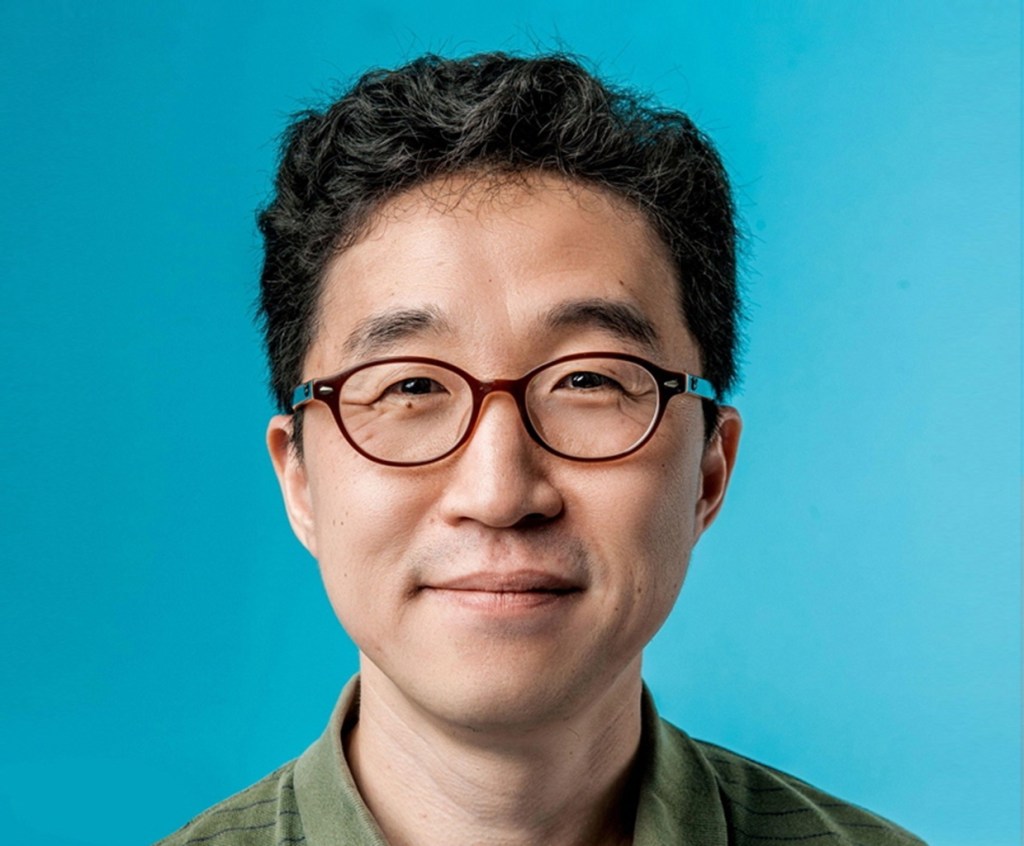
Kim Kee-eung is a Professor at the Kim Jae-chul Graduate School of AI at KAIST and Director of the National AI Research Hub. He is a leading expert in artificial intelligence and machine learning, particularly in reinforcement learning. Kim earned his B.S. from KAIST in 1995 and his Ph.D. from Brown University in 2001. He previously worked at Samsung SDS and the Samsung Advanced Institute of Technology (SAIT). In 2020, his team won first place in the international AI competition “L2RPN Challenge.” In 2024, he received the “Influential Paper Award” from the International Foundation for Autonomous Agents and Multi-Agent Systems (IFAAMAS).
