Seminar
Doosan Robotics’ Physical AI: The Present and the Future
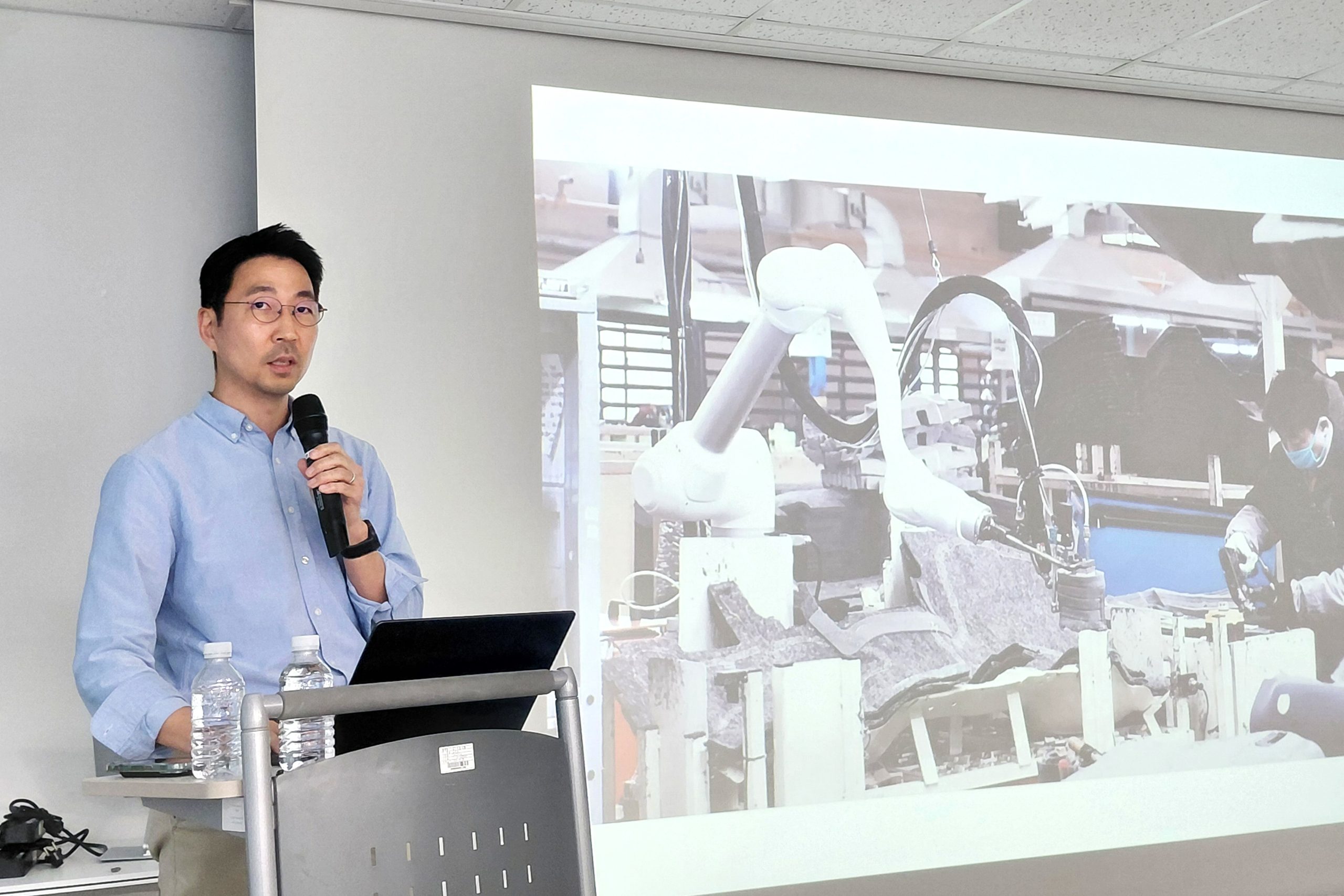
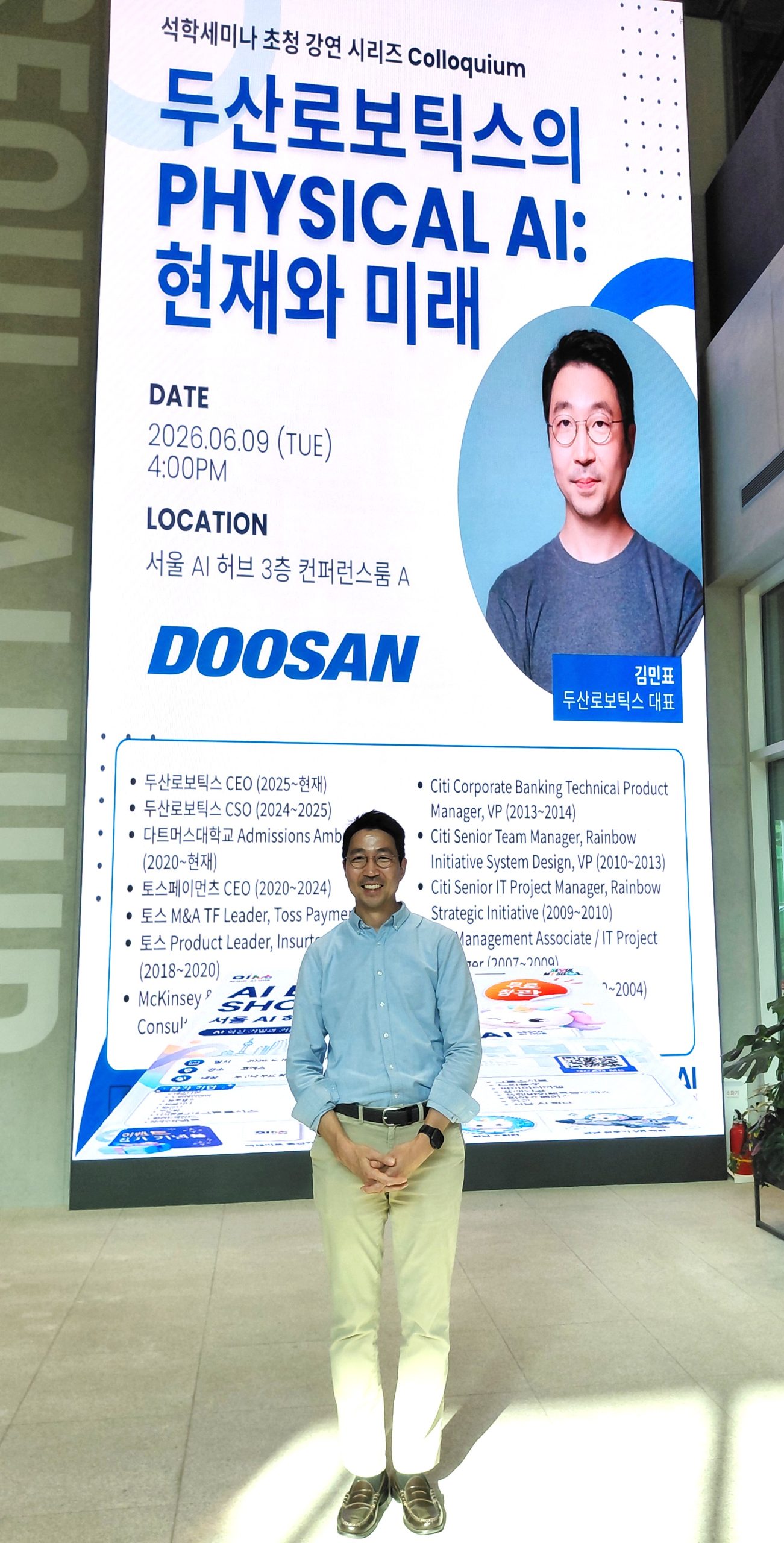
As the AI paradigm extends beyond software into the physical world, Kevin Kim, CEO of Doosan Robotics, laid out a roadmap leading from collaborative robots to industrial humanoids. On June 9, the National AI Research Lab (NAIRL) and the KAIST Kim Jaechul Graduate School of AI co-hosted a Distinguished Scholar Seminar featuring Kevin Kim at the Seoul AI Hub. Held under the theme “Doosan Robotics’ Physical AI: The Present and the Future,” the event drew around 200 participants on-site and online, centered on KAIST students alongside partner university members and industry partners.
Kevin Kim opened with a clear diagnosis of the central challenge facing Physical AI: data. Unlike the internet text that fueled large language models, the force and motion data generated when a robot works in the physical world lives largely offline and unlabeled, making it difficult to harness. He pointed to the gap between simulation and reality, and to the structural reality that those who own the data and customer relationships are often not the ones building foundation models, as defining hurdles the field must overcome.
He then shared how Doosan Robotics is approaching these challenges. Building on a decade of field engineering as a collaborative robot company, Doosan is evolving from a cobot manufacturer into a provider of intelligent robotic solutions that solve customers’ problems directly. Kevin Kim described a step-by-step path from cobots to AI-powered cobots and, ultimately, to industrial humanoids, defined not by a human form factor but by how completely a robot can carry out the full task of a skilled worker.
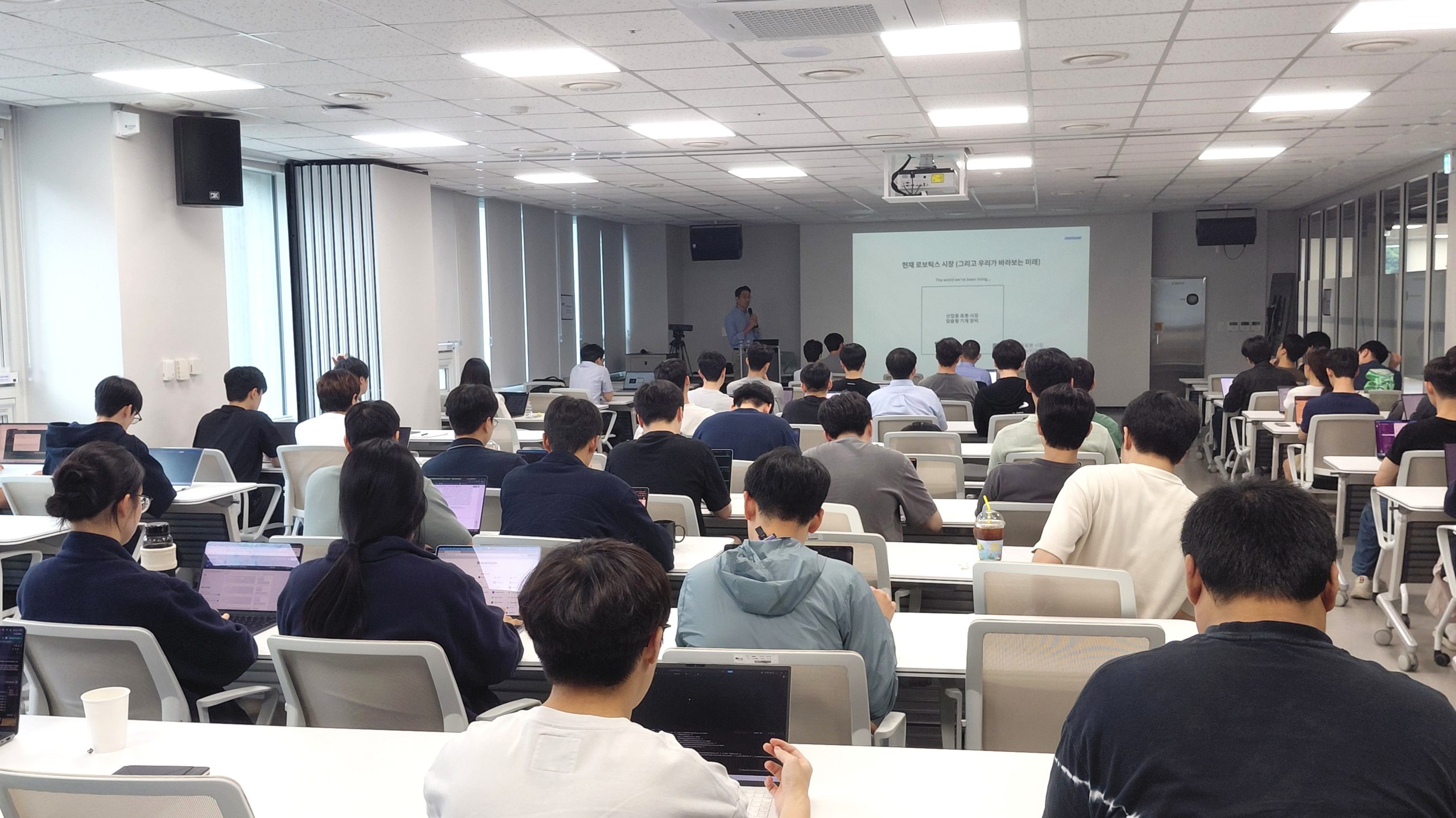
At the heart of this vision is an agentic architecture, in which training, simulation, and runtime agents work together in a closed loop, allowing a robot to understand its environment, plan a task, execute it, and continuously refine its own model. Kevin Kim framed this as a UX revolution in automation: users need not understand the architecture beneath, only direct a goal and trust the robot to complete it. Drawing on his earlier career, he emphasized that user-centered design is itself a form of innovation.
In the Q&A that followed, graduate students and researchers raised questions on the bottlenecks of Physical AI, the gap between academic and industrial robotics research, and competition in a rapidly opening market. Kevin Kim returned to a consistent message: define the problem narrowly, focus sharply, and build a clear pattern that can inspire both industry and academia.
Our thanks to Kevin Kim for such a candid and forward-looking perspective. NAIRL will continue connecting leading entrepreneurs and researchers with Korea’s AI community, fostering an ecosystem where researchers can drive both scientific discovery and industrial innovation.