
Research
NAIRL’s Professor Seungryong Kim of KAIST to Present 11 Papers at NeurIPS 2026
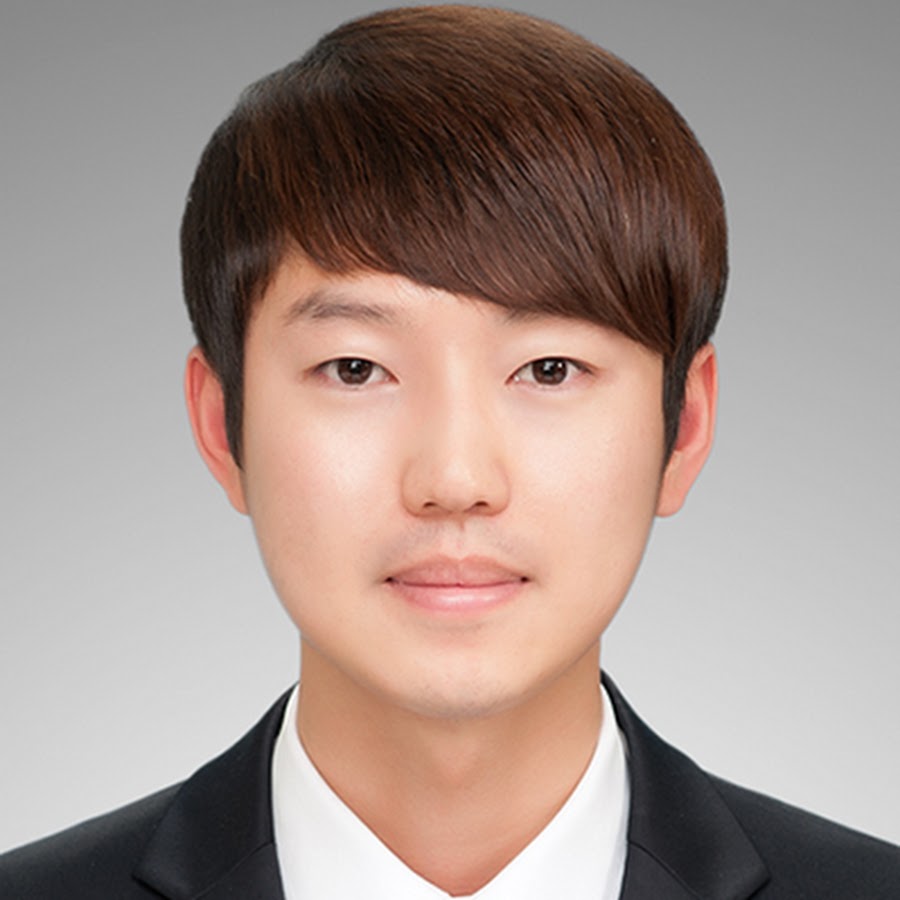
A research team led by Professor Seungryong Kim of the Kim Jaechul Graduate School of AI at KAIST, affiliated with the National AI Research Lab (NAIRL), will present 11 papers at NeurIPS 2026. Spanning 3D vision, video generation, and multimodal reasoning, the work was carried out with partners including NVIDIA, Google DeepMind, Adobe Research, ETH Zürich, Google, TUM, New York University, Purdue University, Korea University, Samsung Electronics, Hyundai Motor Company, NC AI, and Krafton.
Three of the papers repurpose pretrained video diffusion transformers for tasks they were never built for. TrackCraft3R, with Google DeepMind, turns one into a feed-forward dense 3D tracker, running 1.3 times faster with 4.6 times less memory than the strongest prior method. XTrack unifies cross-view matching and temporal tracking so that an object keeps the same identity across viewpoints, occlusions, and ambiguous observations. VideoMaMa++, with Adobe Research, carries finished mattes across chunk boundaries so that long, in-the-wild videos stay consistent without flickering.
Four papers address robust 3D vision and spatial intelligence. GARD, with Samsung Electronics, restores degraded multi-view images directly in geometry-aware feature space, recovering accurate 3D geometry and high-quality images at once. TrackCue, with Korea University, Hyundai Motor Company, and Purdue University, repurposes image-based point tracking to separate true object motion from ego-motion in LiDAR data for autonomous driving. Imagine3D-LLM, with ETH Zürich, Google, and TUM, teaches multimodal LLMs to imagine a coarse 3D scene before answering a spatial question. SpatialClaw, with NVIDIA, is a training-free agent that writes and runs code as its action interface, reaching 59.9 percent average accuracy across 20 spatial reasoning benchmarks.
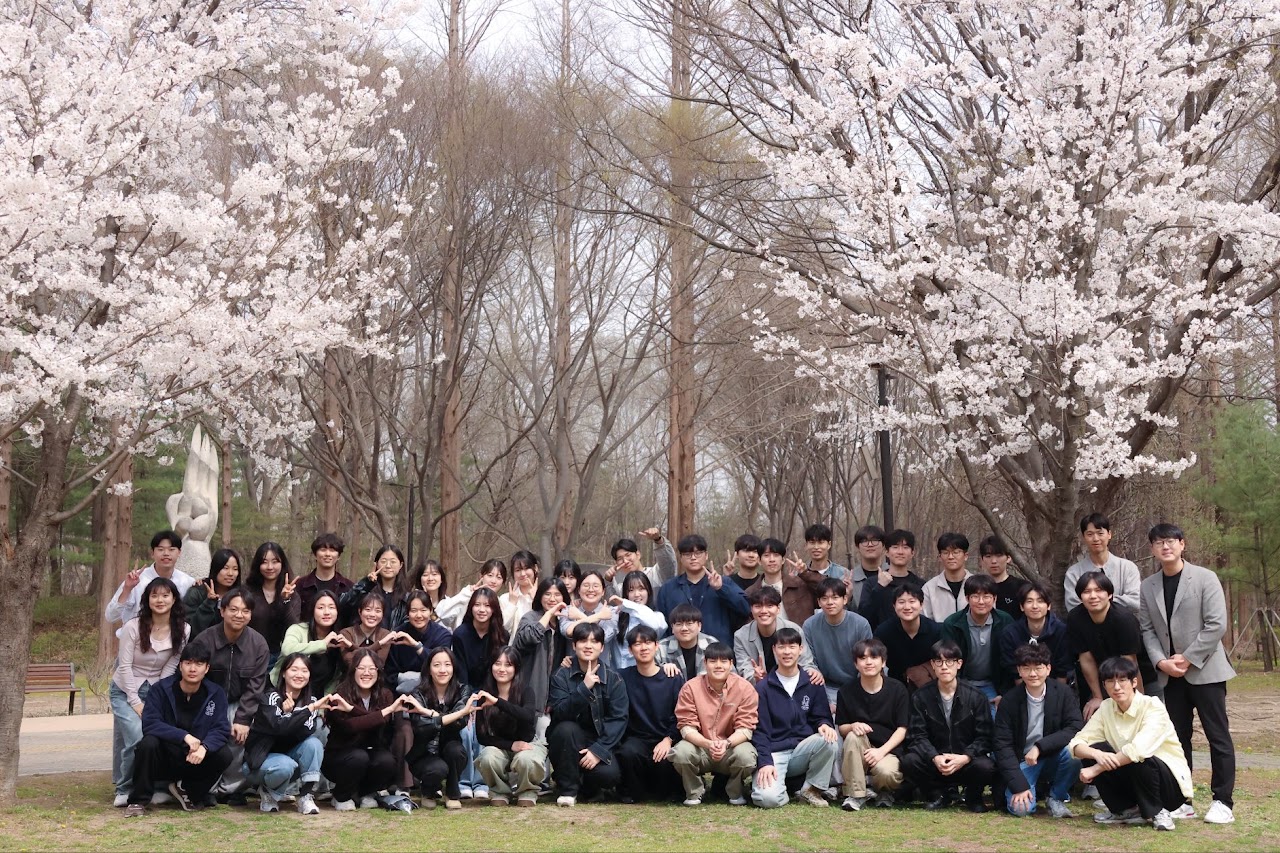
The remaining four concern controllable and efficient generative models. CORAL, with NC AI, aligns person-to-garment attention with geometric correspondence for more faithful virtual try-on. T2Mo animates 3D meshes from 3D trajectories and text, giving precise control over the paths that selected points follow. CSFM, with New York University, learns a condition-dependent source distribution for flow matching, yielding faster convergence and straighter flow fields in text-to-image generation. LoopMDM, with Krafton, loops selected Transformer layers in masked diffusion language models, cutting training FLOPs by up to 3.3 times and improving GSM8K reasoning by up to 8.5 points with no added parameters.
NAIRL will continue to introduce research that expands how AI sees, generates, and reasons about the world to the broader domestic and international AI community.
TrackCraft3R: https://arxiv.org/abs/2605.12587 / Project page: https://cvlab-kaist.github.io/TrackCraft3r/
XTrack: https://arxiv.org/abs/2610.37633 / Project page: https://cvlab-kaist.github.io/XTrack/
VideoMaMa++: https://cvlab-kaist.github.io/VideoMaMa-PlusPlus/
GARD: https://arxiv.org/abs/2605.26230 / Project page: https://cvlab-kaist.github.io/GARD/
Imagine3D-LLM: https://arxiv.org/abs/2609.38177 / Project page: https://cvlab-kaist.github.io/Imagine3D-LLM/
SpatialClaw: https://spatialclaw.github.io/ / Code: https://github.com/NVlabs/SpatialClaw
CORAL: https://arxiv.org/abs/2602.17636 / Project page: https://cvlab-kaist.github.io/CORAL/
T2Mo: https://arxiv.org/abs/2606.05162 / Project page: https://cvlab-kaist.github.io/T2Mo/
CSFM: https://arxiv.org/abs/2602.05951 / Project page: https://junwankimm.github.io/CSFM/
LoopMDM: https://arxiv.org/pdf/2605.26106
CVLAB: https://cvlab.kaist.ac.kr/